Found your way here because you love Monet?
Most vintage Monet jewelry is signed, but the mark alone rarely gives you an exact date. Early pieces may carry the names Monocraft, Monét, or Monet Jewelers, while later jewelry usually bears a version of the familiar MONET signature. To identify and date a piece, examine the lettering, copyright symbol, clasp, construction, finish, and overall design together—not the signature by itself.
About Monet
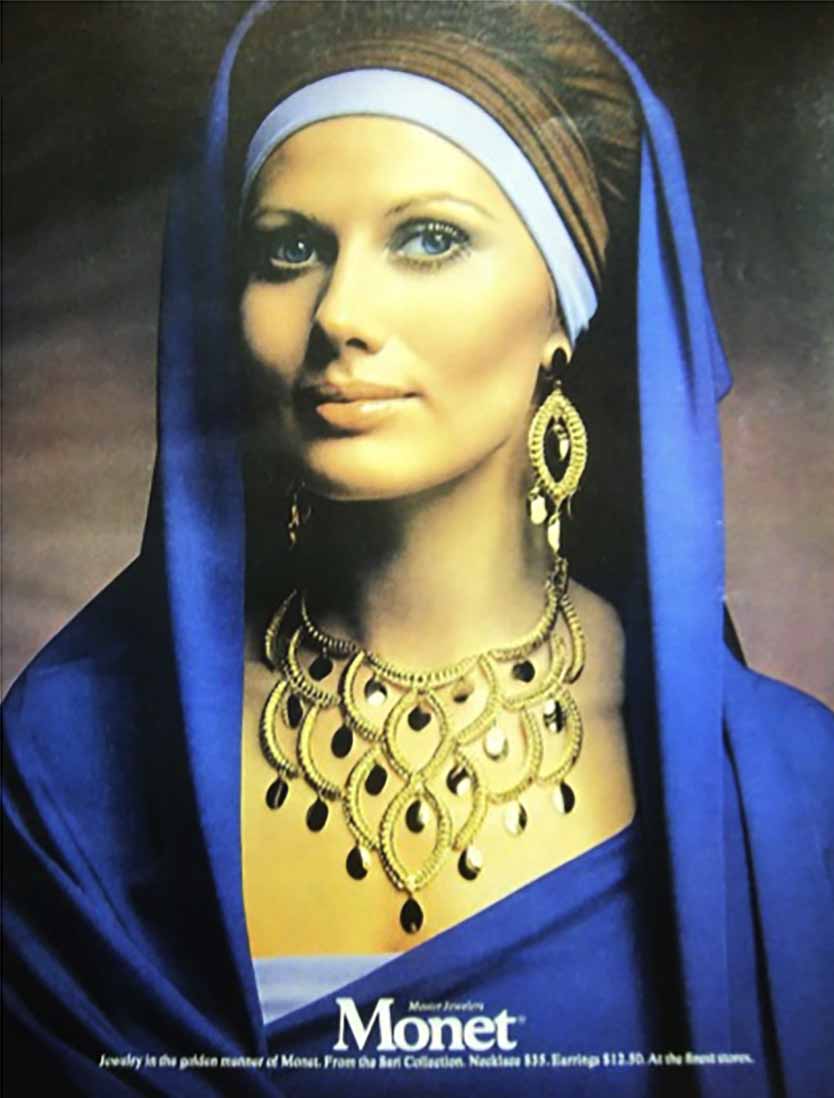
Monet jewelry built its reputation on pieces that looked like fine gold—without the price tag.
For decades, it offered women a way to wear polished, well-made jewelry that felt expensive but was made for everyday life.
How to Identify Vintage Monet Jewelry
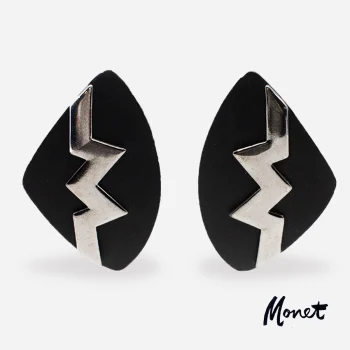
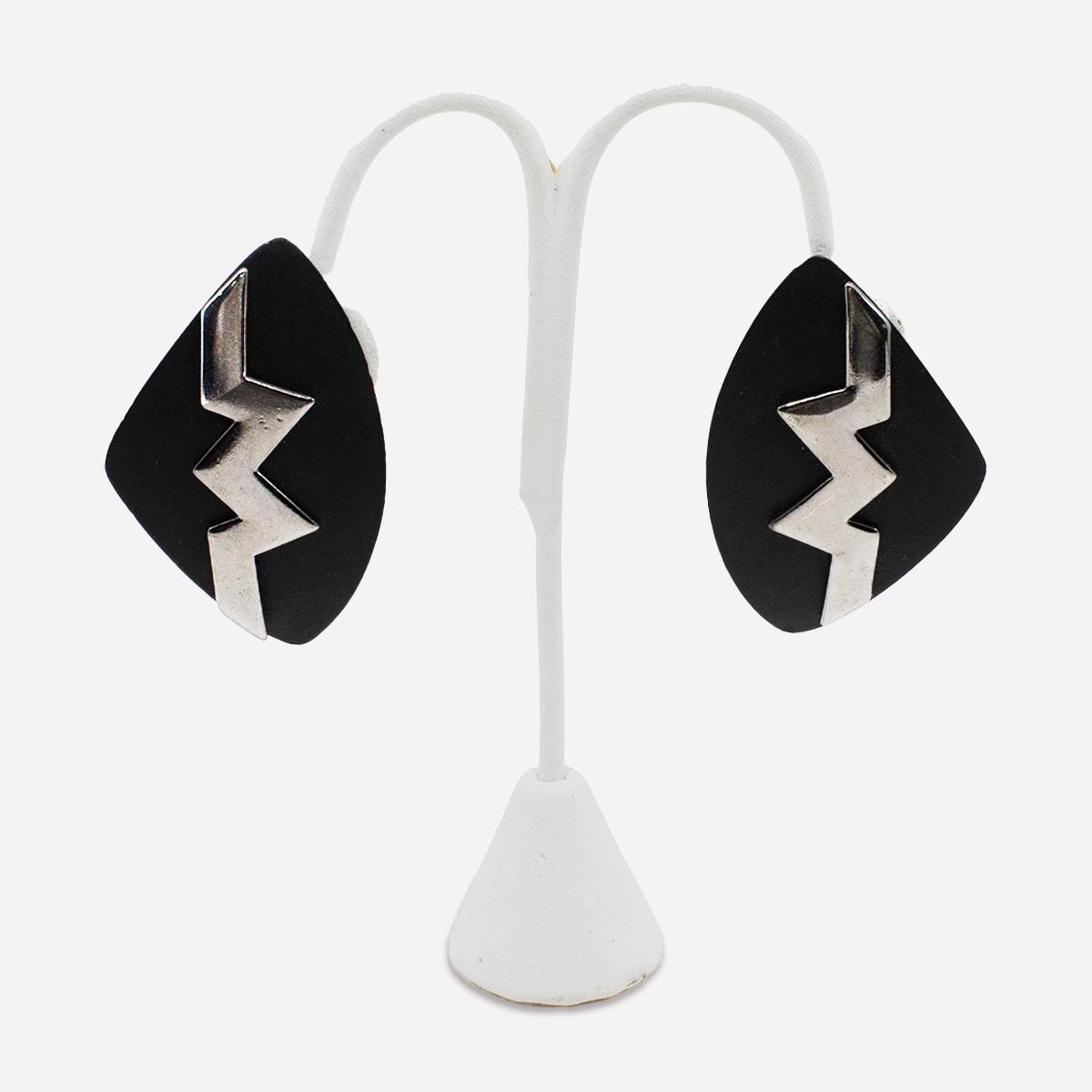
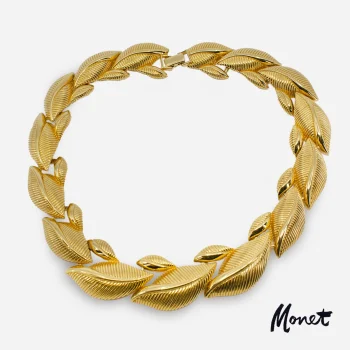
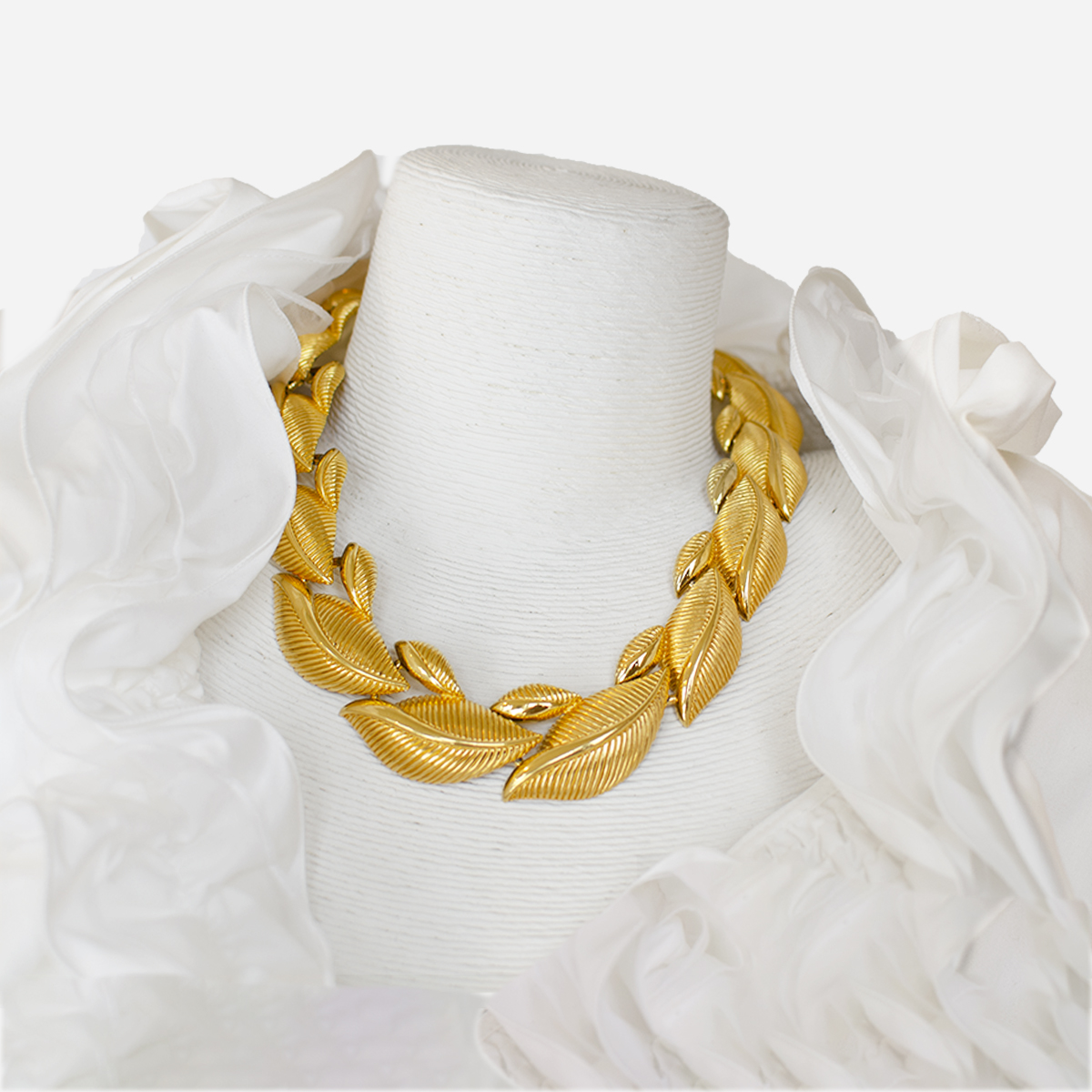
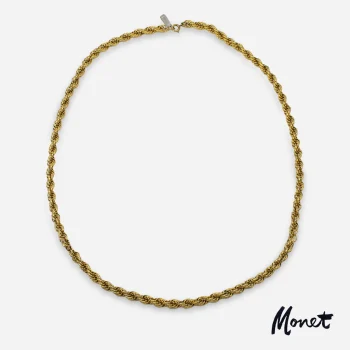
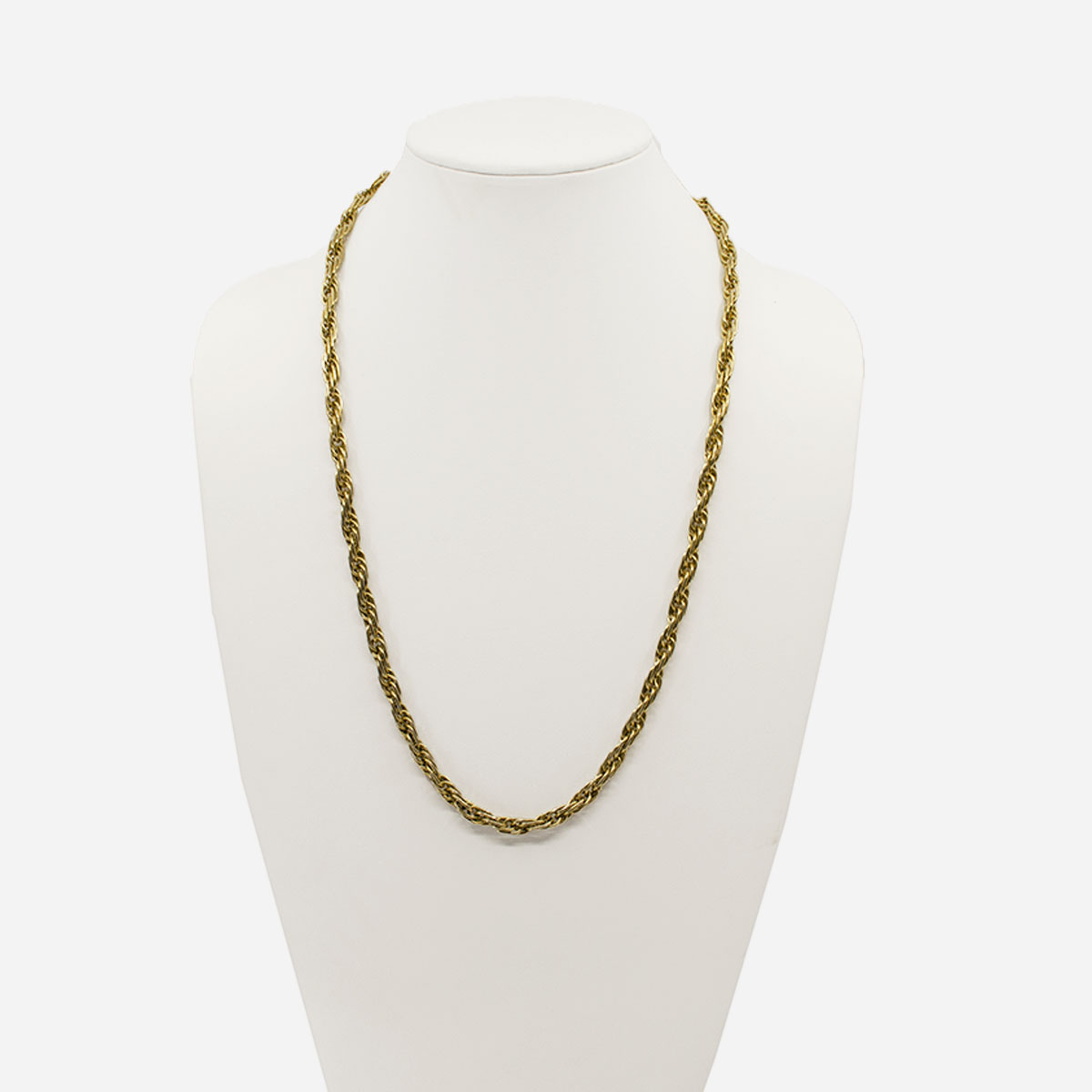
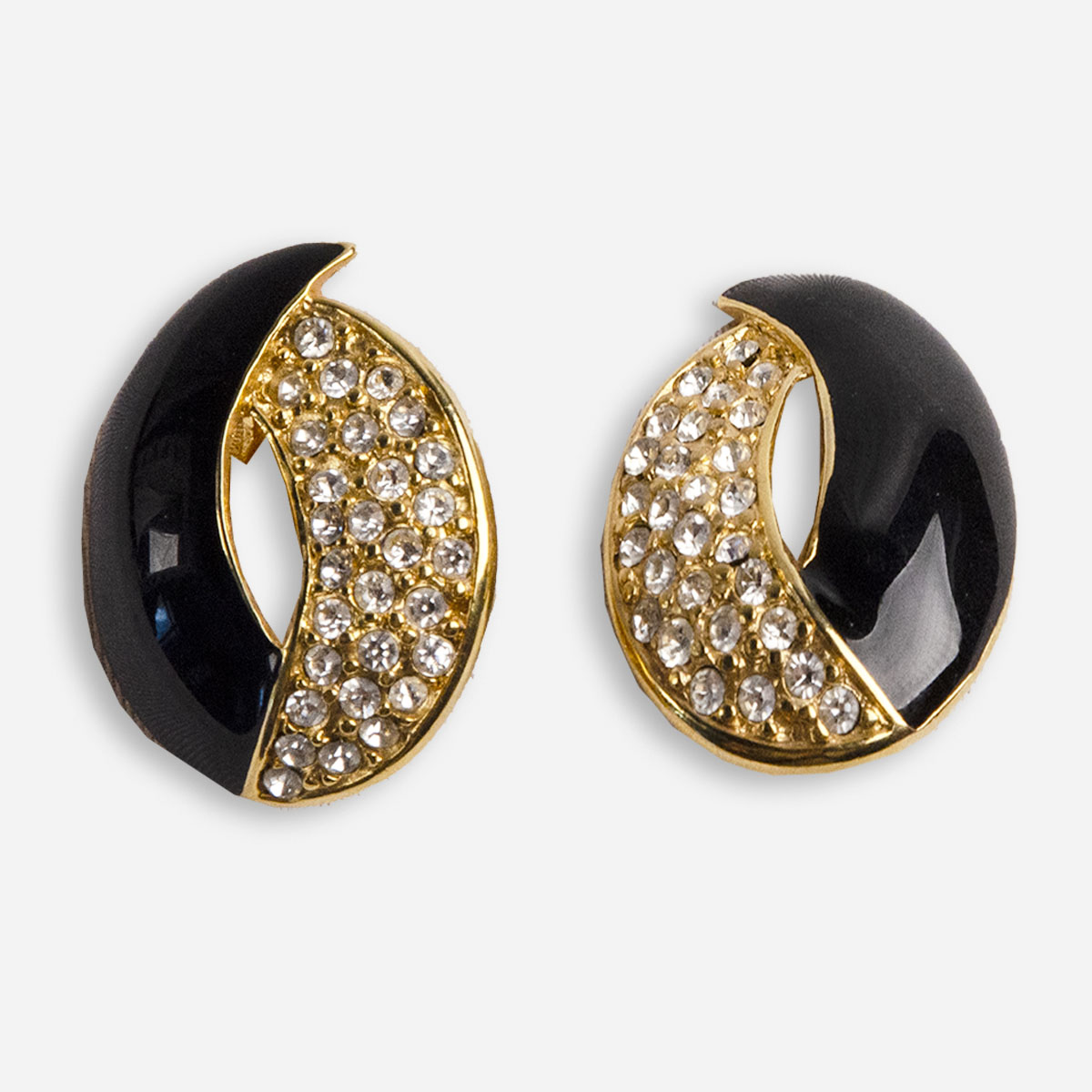
Vintage Monet jewelry is usually easy to spot because Monet pieces are marked with the company name. Look for clean metalwork, smooth gold- or silver-tone plating, substantial weight, and clasps or clips that feel well made. Many older Monet pieces were designed to give women the look of fine jewelry without the fine-jewelry price, which is why so many necklaces, bracelets, earrings, and brooches still look polished decades later.
Monet Jewelry Marks and Approximate Dates
Monet used several signatures during its long history, but most marks provide only an approximate date range. Clasps and other components may have been replaced, so examine the signature alongside the piece’s construction, materials, finish, and design.
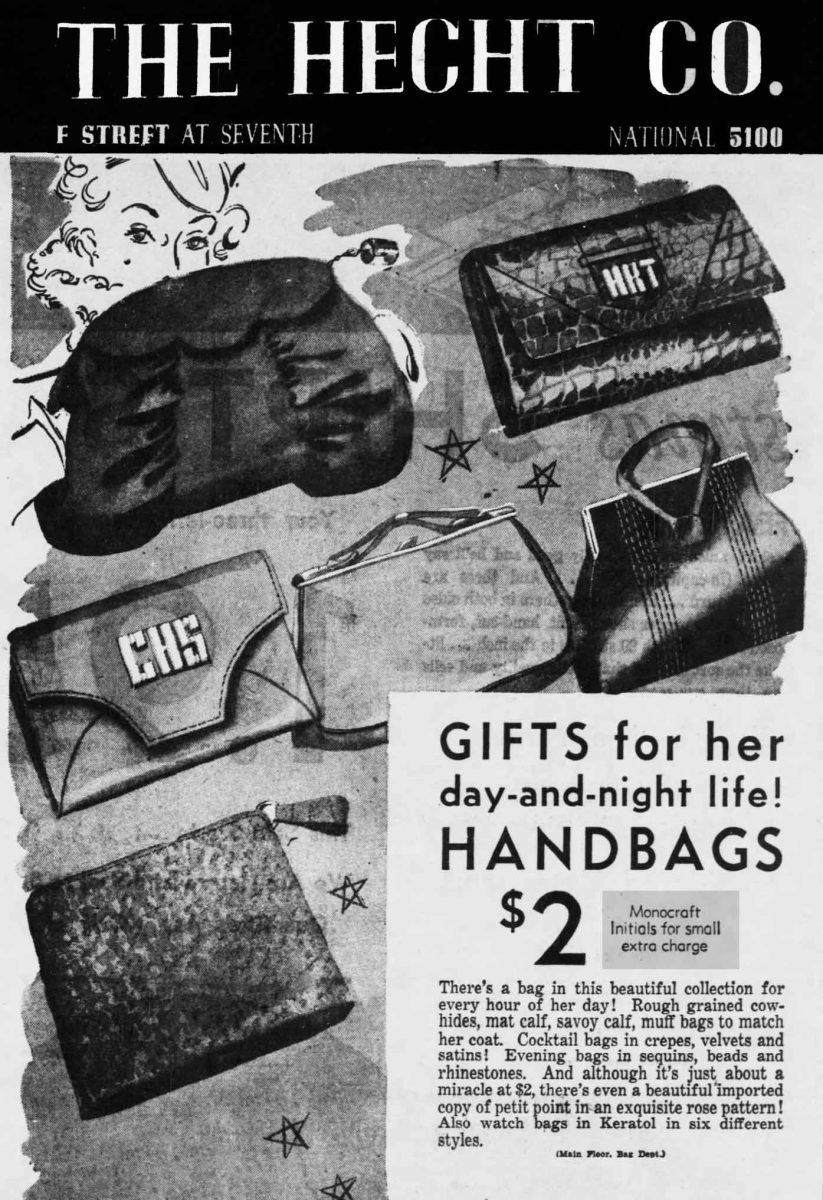
MONOCRAFT — 1930s
Before Monet became the company’s best-known name, Monocraft produced personalized jewelry, including its “Dangles” and “Click-Its” lines. These early pieces were generally marked MONOCRAFT in block letters.
Monet Jewelers and Monét
Late 1930s to Mid-1940s
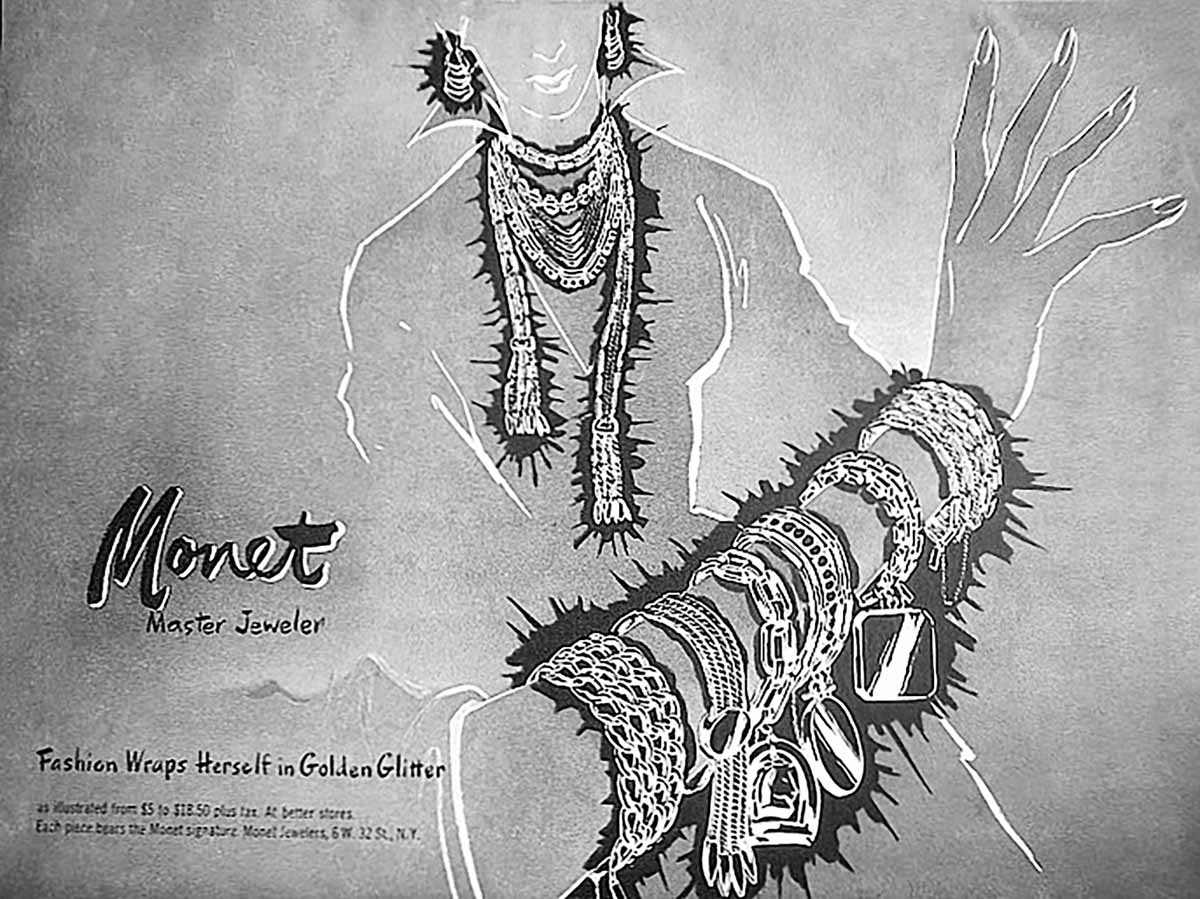
Early Monet necklaces and some bracelets may have a small dangling tag reading “Monet Jewelers.” Brooches and dress clips from this period may be marked “Monét” in serif lettering with an accent over the “e.” These early marks are much less commonly found than later Monet signatures.
Plain MONET or Monet — Used Across Multiple Decades
A plain Monet signature appears in several lettering styles and on different parts of a piece, including tags, clasps, earring clips, and the backs of brooches. The absence of a copyright symbol does not automatically prove that an item was made before 1955. Always evaluate a plain mark alongside the jewelry’s construction and style.
Jewelry historian Pamela Wiggins documents these early Monet marks and examples in her research for Costume Jewelry Collectors International.
© MONET — About 1955 and Later
Monet began adding a copyright symbol to many of its signatures around the mid-1950s. The symbol establishes an approximate earliest date, but it does not identify a particular decade. Variations of © MONET remained in use for many years.
What a Monet Mark Cannot Tell You
A signature can help identify the maker, but it does not establish an exact production year, guarantee authenticity, or determine value. Compare the mark with the quality and age of the surrounding metal. Uneven lettering, an oddly placed signature, or a mark that appears inconsistent with the construction deserves closer examination.
The Beginning
Brothers Michael and Joseph Chernow founded Monocraft Products Co. in 1927. The company initially specialized in metal monograms and expanded into personalized jewelry during the 1930s. Its popular “Dangles” and “Click-Its” lines allowed customers to add interchangeable initials to bracelets, pins, fobs, and necklaces.
In 1937, Monocraft established Monet Jewelers as a subsidiary offering fashionable costume jewelry. Monocraft and Monet appeared together in early advertising, but the Monet name eventually became the company’s best-known identity.
Success As Monet
Monet found its design direction when artist and Cartier designer Edmond Mario Granville joined Monocraft in 1934, before the Monet jewelry line debuted. His fine-jewelry background helped establish the polished, mostly all-metal look that became closely associated with Monet. The company also became known for durable plating and carefully engineered clasps, links, and earring mechanisms.
Michael Chernow patented numerous jewelry designs and mechanisms, including an adjustable friction-style ear clip intended to make clip earrings more comfortable. Although some early Monet designs featured enamel, rhinestones, marcasites, and cabochon stones, these materials were used selectively. The company concentrated largely on gold- and silver-tone metal jewelry during the 1940s and later returned to colored stones and more extensive enamel work in the 1980s.
New Partners
A longtime family business with multiple generations of employees, Michael Chernow sought a business partner to continue the company after his brother’s death. He found that partner when General Mills bought the company in 1968 and kept the current management in place. After a successful run under General Mills’ capable management, Monocraft and Monet were sold to Crystal Brands Apparel Group in 1985.
During the early 1980s, Monet produced licensed costume jewelry for Yves Saint Laurent. The arrangement paired Monet’s manufacturing capabilities with Saint Laurent’s creative direction. Many pieces featured bold geometric forms, substantial metalwork, and saturated jewel-toned crystals or enamel. Made for the American market, this licensed jewelry should not be confused with earlier YSL pieces produced in France by specialist ateliers.
The Downturn
As American-made jewelry gave way to cheaper imports, the company eventually filed for bankruptcy. Liz Claiborne purchased Monet in 2000. Claiborne created The Monet Group, which includes Trifari and Marvella. Like so many other storied names in costume jewelry, production moved overseas, and Monet now offers much lower-quality jewelry.
Highly Collectible Vintage Jewelry
Vintage Monet is highly prized by collectors for its quality. Thanks to triple plating, Monet pieces often remain in excellent condition even after more than 50 years of wear. Most Monet-branded jewelry is marked with the company name.
Looking for Monet? We add more vintage jewelry every week—each piece chosen for quality, wearability, and design. Contact us to be notified when more Monet arrives.
Photos copyright © 2026 Madge’s Hatbox Vintage. Join our Facebook group, Mad About Vintage, for weekly specials.